
Healthy Cat Food Guide, Nutrition Tips by Age and Breed
Keeping a cat is indeed enjoyable. They can be loyal, playful companions, and bring a warm atmosphere to the home. However, caring for them requires


Quantum computing may sound like something out of a science fiction movie, but it’s actually one of the most exciting things in modern technology. Unlike traditional computers that process information using bits of 0s and 1s, quantum computers use qubits, which can be both 0 and 1 at the same time. This unique ability allows them to solve complex problems much faster than regular computers.
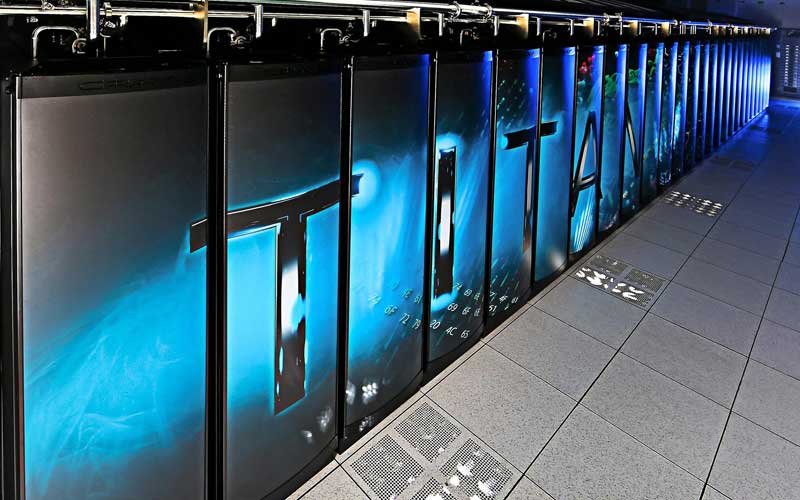
Ordinary computers, whether a small laptop or a massive supercomputer, work using tiny units of information called bits. Each bit can only have two values of 0 or 1. Every game, website, and video seen on a screen is made from countless strings of these binary digits. This system works perfectly for most tasks, but when problems become extremely complicated, even the fastest machines start to struggle.
Quantum computers, on the other hand, follow a completely different set of rules. Instead of bits, they rely on qubits, short for quantum bits. A regular bit acts like a switch that’s either on or off, but a qubit behaves more like a spinning coin. While it’s in motion, it’s not just heads or tails, it’s both at once. This strange behavior, known as superposition, allows qubits to exist in multiple states simultaneously.
Because of this, quantum computers can process many possibilities at the same time. For example, two qubits in superposition can represent four combinations at once, like 00, 01, 10, and 11. The more qubits are added, the more outcomes they can handle. This power to work on countless options all at once is what makes quantum computing so revolutionary.
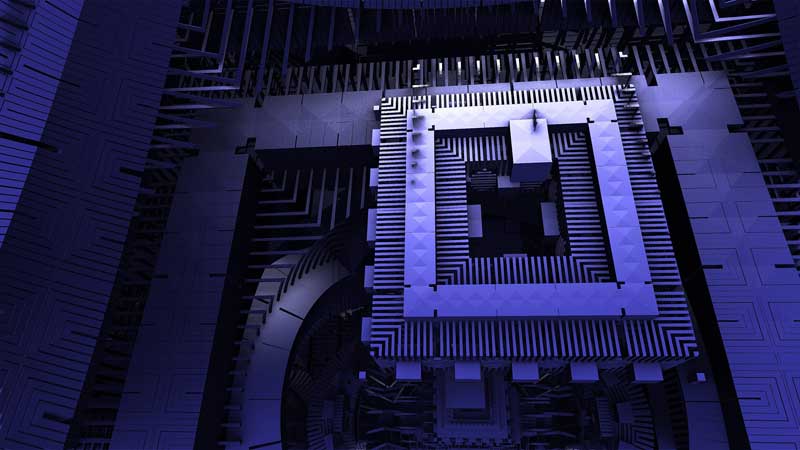
Superposition alone isn’t enough. A second quantum phenomenon, called entanglement, is what truly unlocks the power of this new computing paradigm. Entanglement is a mysterious connection that can form between qubits. If two qubits are entangled, their fates are linked. If one measures one qubit and finds it in a certain state, they will instantly know the state of its partner.
Albert Einstein famously described this phenomenon as spooky action at a distance. In quantum computers, entanglement acts like an invisible web that helps qubits work as a team. This teamwork allows them to process information in ways no regular computer can, solving problems much faster.
Another important part is interference. When water waves meet, they can either grow stronger or cancel each other out. Quantum computers use this same idea to boost the right answers and silence the wrong ones. By carefully designing algorithms, scientists make sure that when everything settles, the best solution stands out clearly.
Many of today’s most advanced machines, such as those made by IBM and Google, hang inside large, golden, chandelier-like structures. These are actually massive freezers. The qubits themselves, often made from superconducting circuits, sit at the bottom. Cooled to a temperature a hundredth of a degree above absolute zero, which is colder than the vacuum of space.
Such cold conditions are made because qubits are incredibly delicate. The tiniest vibration, bit of heat, or electrical noise can make them lose their special quantum state. This is a problem called decoherence. Keeping them stable is one of the biggest challenges scientists face.
Different companies use different kinds of qubits. Some rely on superconducting loops, others use trapped ions or tiny atoms held in place by electric fields, and a few even work with particles of light called photons. Each method has its own advantages. But researchers are still trying to find out which one can build the most reliable, large-scale quantum computer.
Quantum computers aren’t designed to run games or open web pages. Their real strength lies in solving complex problems that regular computers can’t handle.
Quantum computers can simulate molecules and atoms with incredible accuracy. This is a task that crushes even the best supercomputers. This could allow researchers to discover new life-saving drugs and design more efficient batteries and materials from the ground up.
Banks and investment firms are exploring quantum computing. In order to optimize investment portfolios, manage risk, and perform complex financial simulations in minutes instead of months.
A quantum computer could analyze countless variables to find the most efficient routes. This is extremely helpful for a global supply chain or optimizing city-wide traffic patterns to reduce congestion and emissions.
The power of quantum computing poses a threat to current internet encryption, but it also offers a solution through quantum cryptography. Which uses the laws of quantum mechanics to create potentially unbreakable secure communication lines.
Quantum computing is often mistakenly seen as a technology of the distant future. But the truth is, it’s already here. While a fully reliable quantum computer is still in development, every experiment brings it closer to reality. This technology could transform entire industries and solve problems once believed to be impossible. It represents a bold step toward understanding and using the deepest laws of the universe.
Keeping a cat is indeed enjoyable. They can be loyal, playful companions, and bring a warm atmosphere to the home. However, caring for them requires

The adventure PC game is among the most exciting games to play, especially for gamers who enjoy challenges. This is because each level presents its

The benefits of SEO for business that every business owner should know. SEO is a successful strategy for promoting products and services online. Many businesses